Saudi International Handicrafts Week (Banan) - Interactive Space (2025)
For this project at Saudi International Handicrafts Week in Riyadh, the Hybrid Xperience team developed an interactive zone focused on merging regional traditions with new media. The installations transformed local crafts, historical patterns, and physical textures into a digital format, offering visitors an interactive way to experience Saudi cultural heritage.
My responsibilities spanned visual design, UX/UI, and the core interaction coding. During the on-site deployment, I handled sensor calibration, hardware testing, and the final launch, ensuring stable performance and a reliable user experience throughout the exhibition.
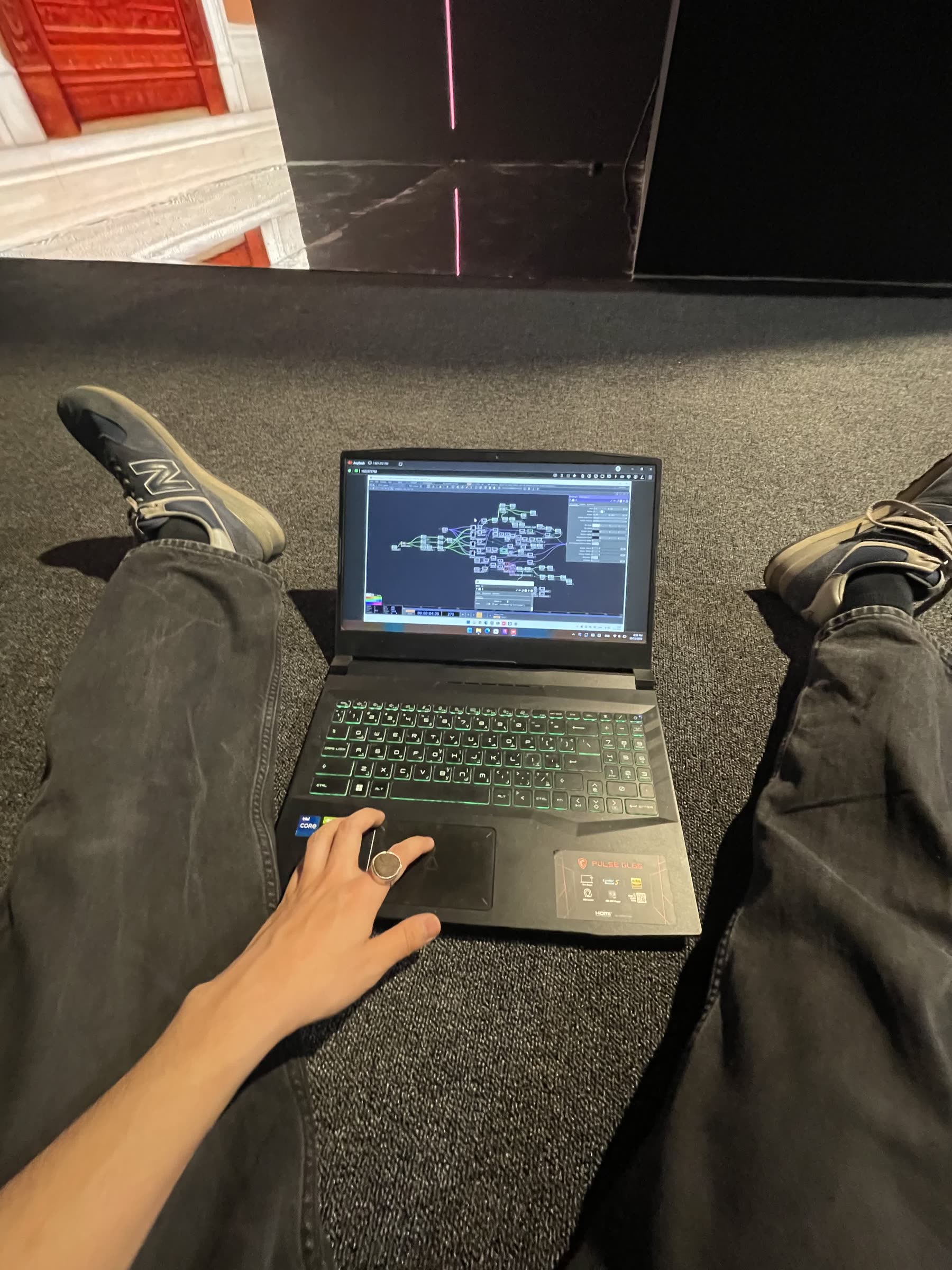
More photos and video from this project are still being added.
Customize Your Own Vase
Concept & Interaction:
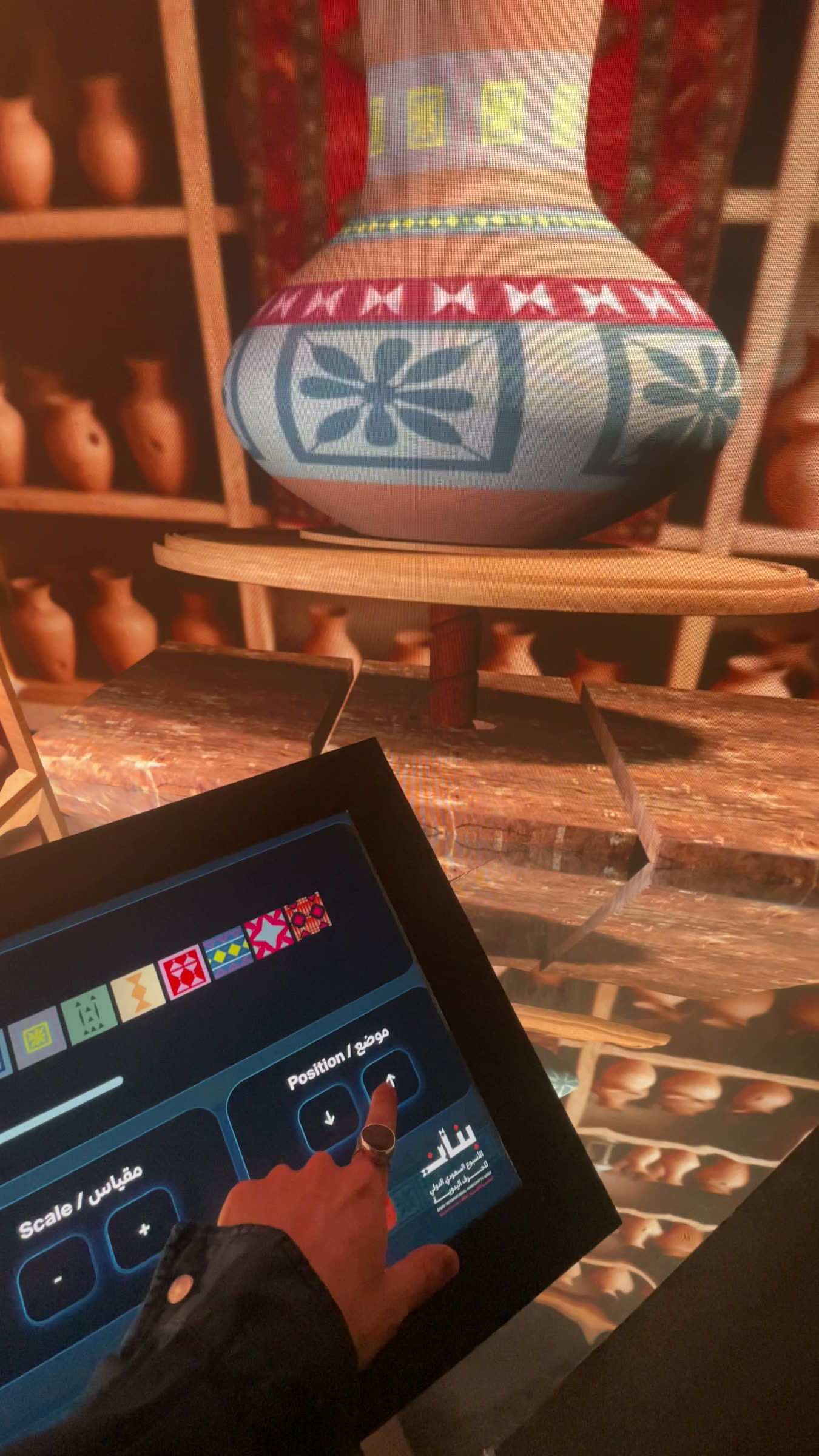
This installation featured an immersive “book-shaped” LED setup paired with a touchscreen interface. Visitors could select a 3D vase inspired by traditional Saudi pottery and personalize it in a virtual workshop. Using the touchscreen, they applied, scaled, and arranged various cultural patterns or painted directly on the surface. One LED plane displayed the interactive workshop, while the other showcased a continuous virtual gallery of previously created vases. Finished designs were instantly rendered, added to the public gallery, and available for download via QR code.
Role & Tech:
I collaborated closely with the UI designer to structure the UX flow and implemented the complete interactive logic in TouchDesigner. Since the high-fidelity real-time rendering was handled in Notch, I engineered the data bridge and signal logic between the two environments, ensuring seamless synchronization of user inputs. My scope also included on-site system testing and final display calibration.
AI Sketch
Concept & Interaction:
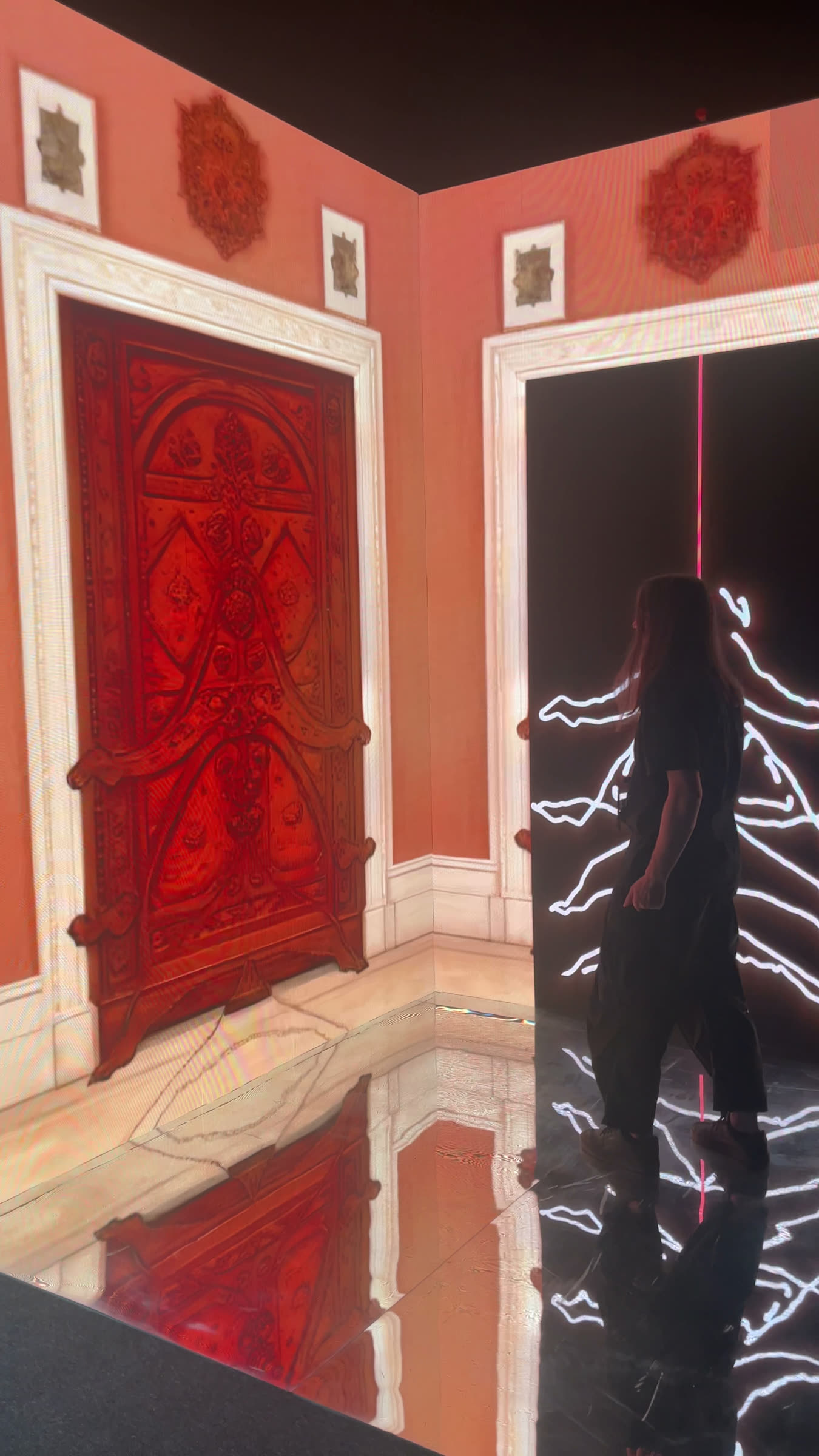
Set within a nook of two perpendicular LED walls, this installation invited users to draw on a digital canvas using their hands. A calibrated LiDAR sensor tracked hand movements on one screen, while a real-time AI pipeline transformed the sketches into detailed visuals on the adjacent screen. Users could choose between two themes—a traditional Saudi door or a craftsman’s workshop—and watch their abstract strokes evolve into intricate generative art instantly.
Role & Tech:
I developed the core interactive system in TouchDesigner, handling LiDAR calibration and integration for the drawing tool. Working alongside the Art Director, I engineered the real-time AI generation pipeline. This involved developing prompts and fine-tuning the visual output to ensure stable real-time image generation directly within TouchDesigner.
Interactive Pattern Maze
Concept & Interaction:
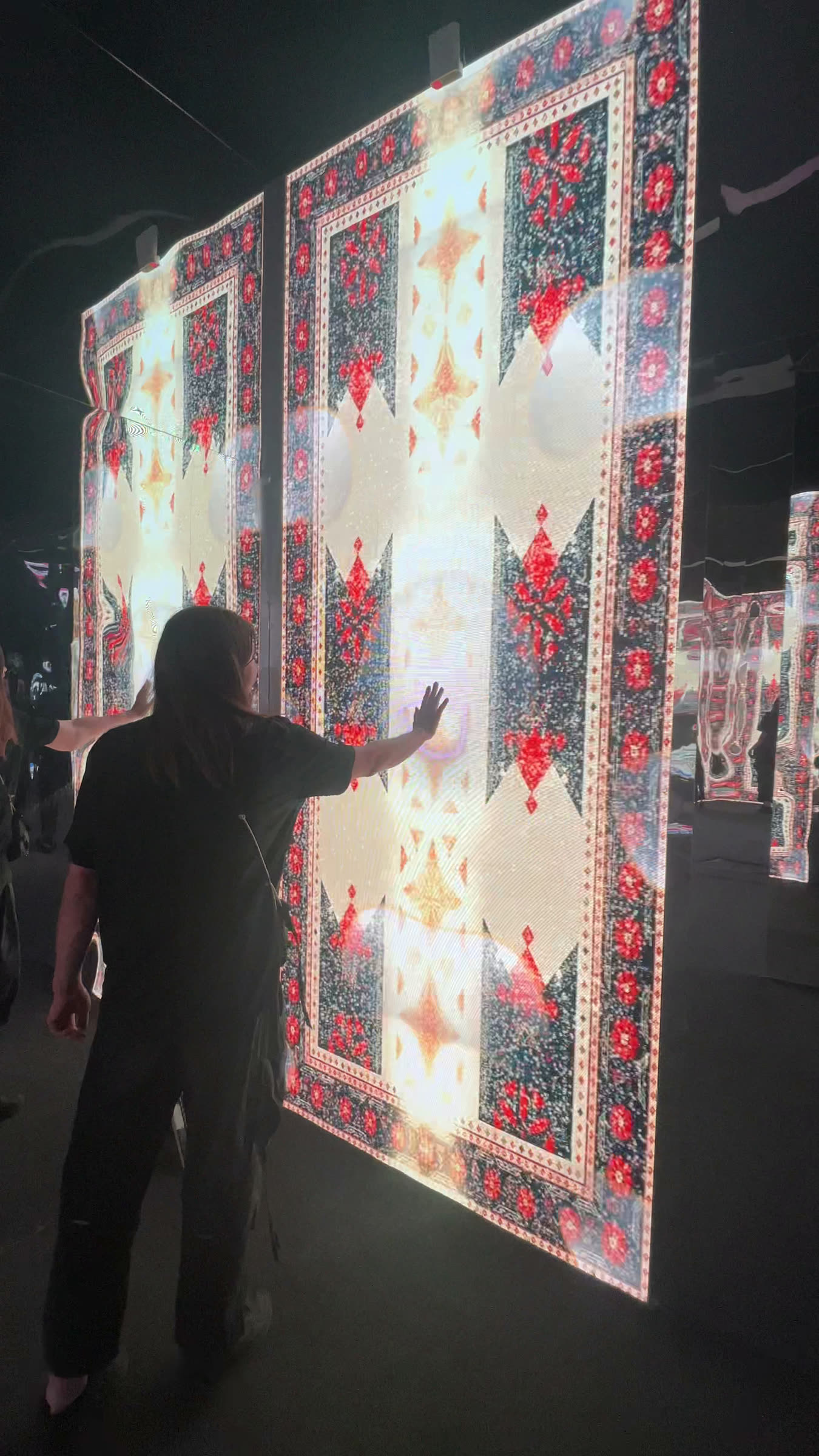
A labyrinth composed of vertical LED screens and mirrors displaying animated Saudi motifs. Out of the five screens, three were interactive. When visitors approached and touched the designated areas, their presence triggered dynamic animations and generative visual effects that brought the pre-rendered traditional patterns to life.
Role & Tech:
I implemented the interaction logic using overhead Kinect sensors. By establishing 3D bounding boxes, I created an invisible touch-detection system for the screens. My responsibilities included sensor calibration, programming generative VFX overlays to complement the graphics provided by the content team, and conducting on-site testing.
Generative Ornament Loom
Concept & Interaction:
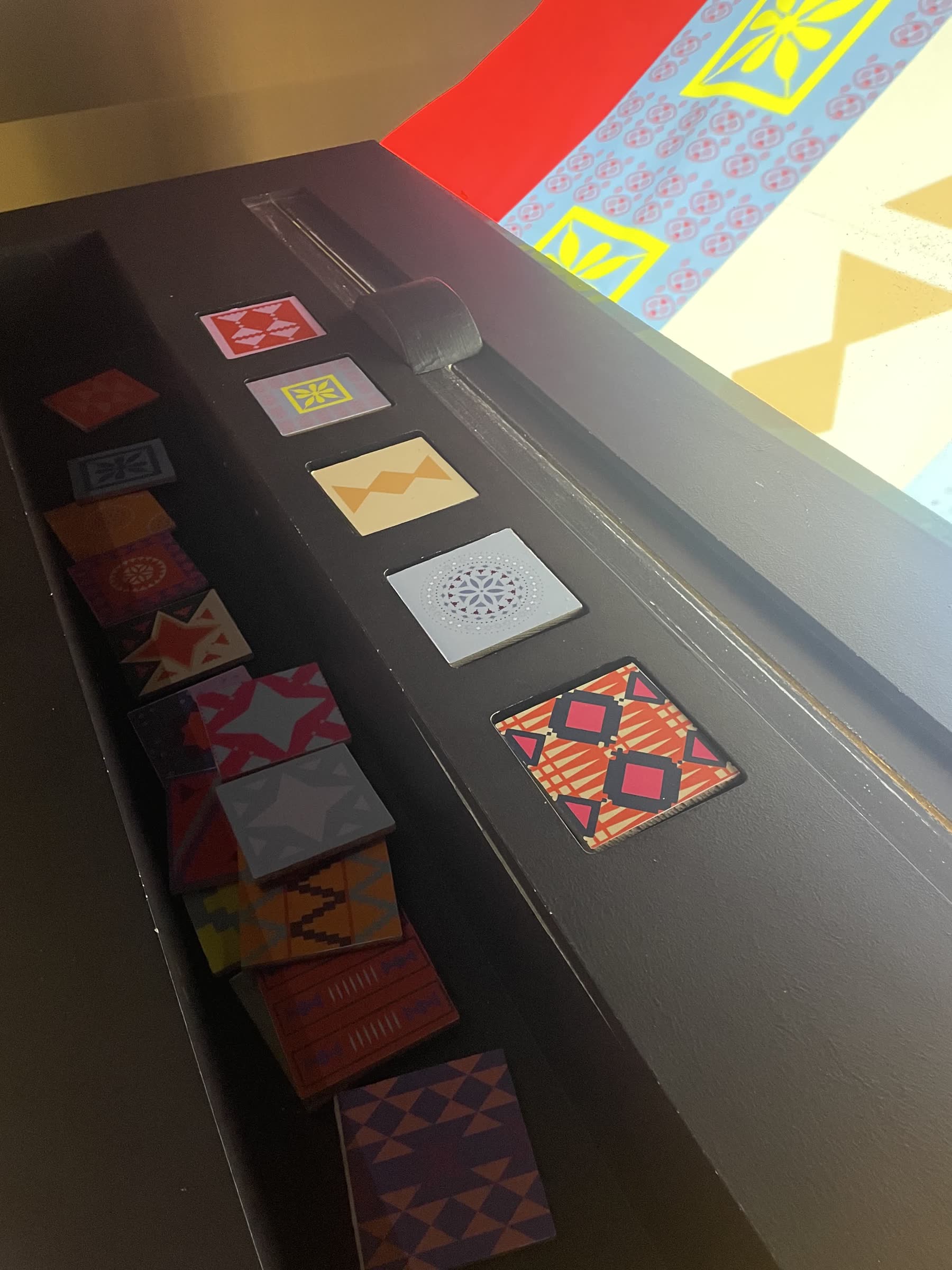
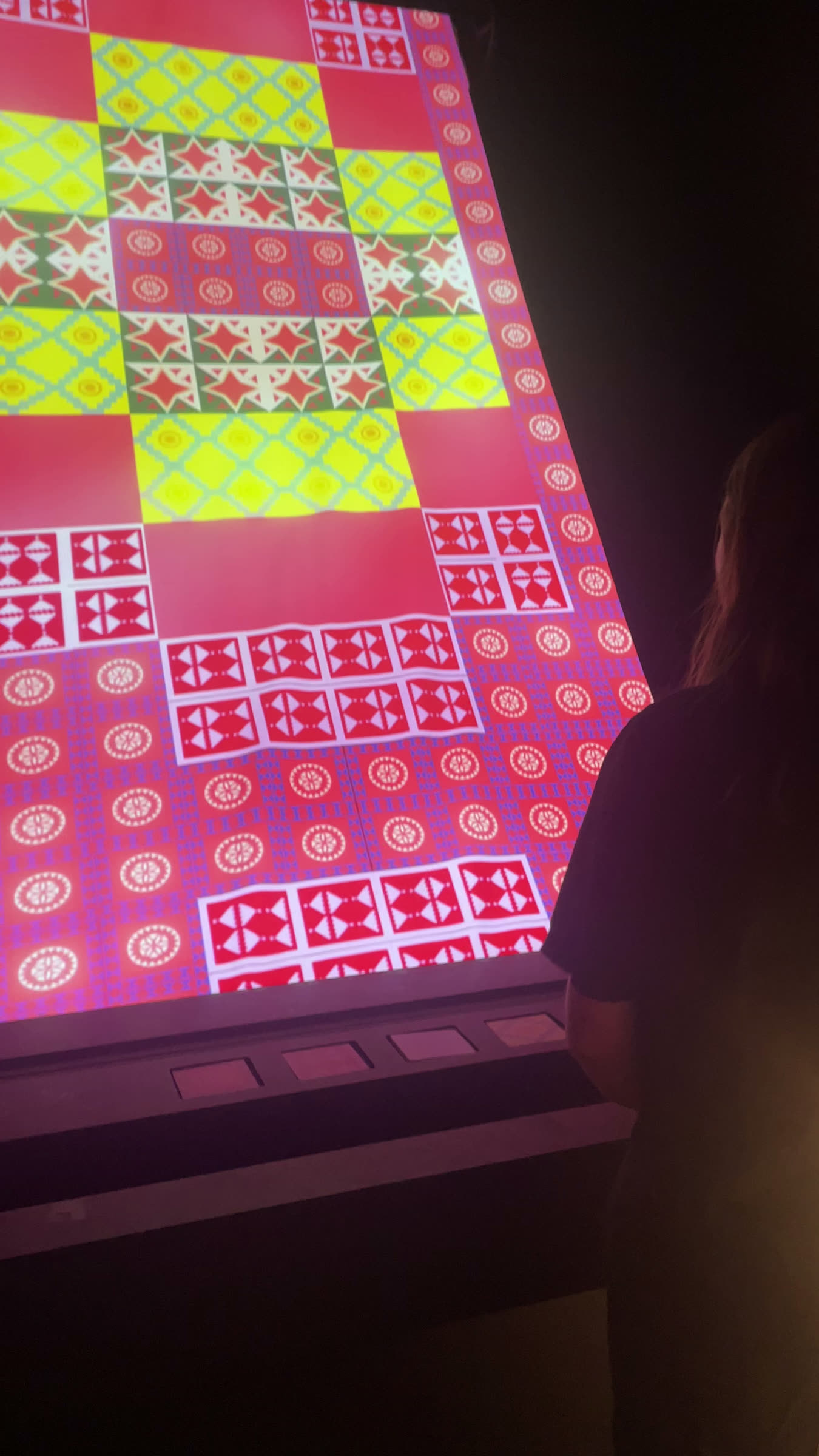
This installation consisted of a physical table with five sensor slots and a large physical canvas stretched diagonally to the ceiling, mapped by projector. Visitors placed physical cards depicting Saudi ornaments into the slots to collaboratively weave a generative digital pattern on the projection. The placement of the cards dictated the position and layout of the ornaments on the canvas.
Role & Tech:
Acting as the Creative Coding Lead, I oversaw the development of this installation, which was programmed by a member of my team using TouchDesigner and Arduino (RFID sensors). On-site, I took charge of the final hardware calibration, system debugging, and troubleshooting, ensuring the seamless integration of the sensors with the visual logic for a stable visitor experience.