Saudi International Handicrafts Week (Banan) - Interactive Space (2024)
As part of Saudi International Handicrafts Week in Riyadh, Hybrid Xperience team created an interactive zone that bridged tradition with contemporary creative technology. The space brought together Saudi Arabia’s cultural heritage and new media tools, turning patterns and textures rooted in local crafts into immersive digital experiences. The zone featured several interactive installations, each reflecting elements of Saudi art and tradition.
I worked on the coding, visual design, interaction development, and UX/UI for the installations. On site, I was responsible for calibrating sensors, testing the systems, and launching the works, making sure every installation functioned reliably and delivered a smooth experience for the audience.
AI Sketch
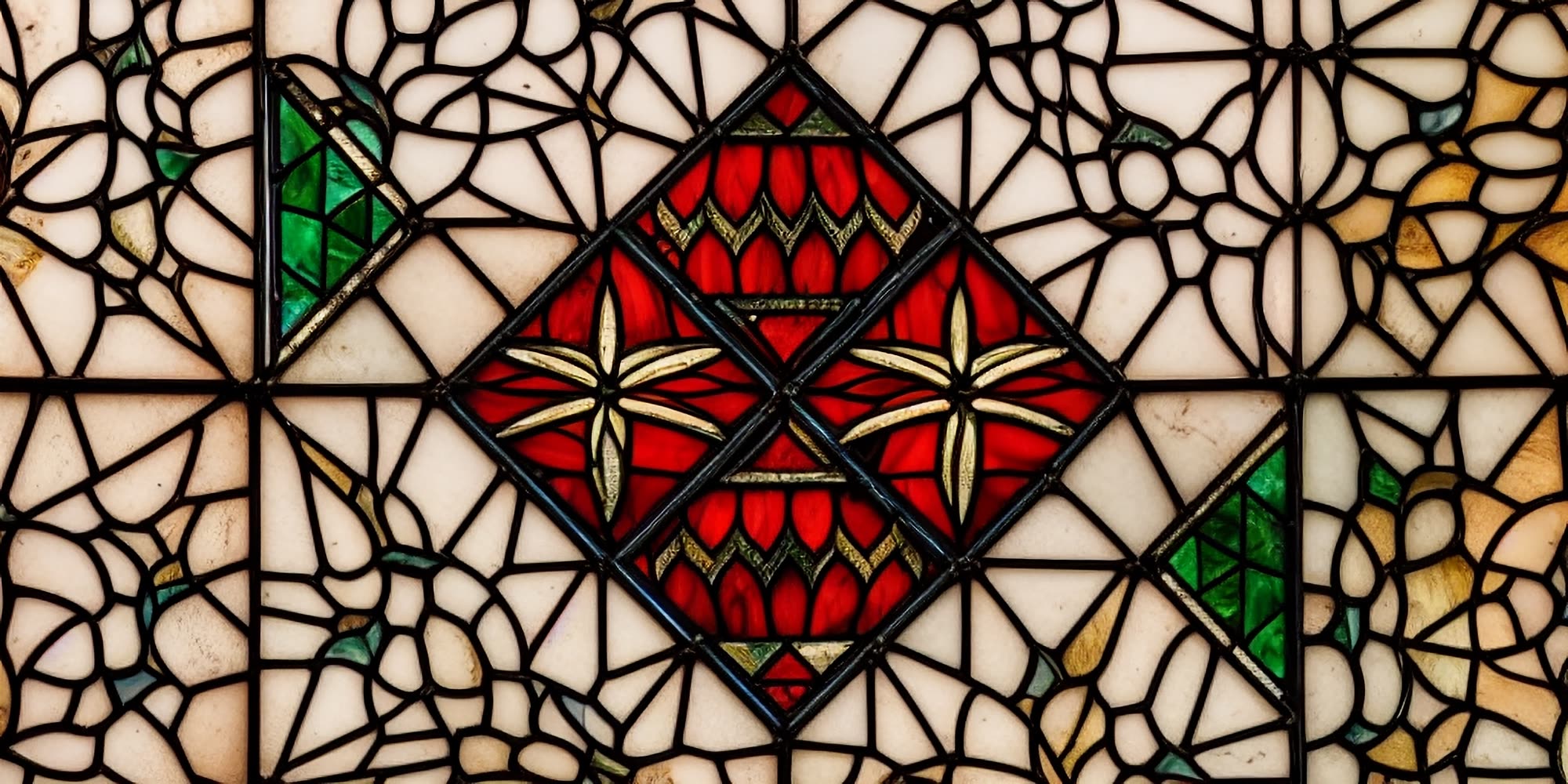
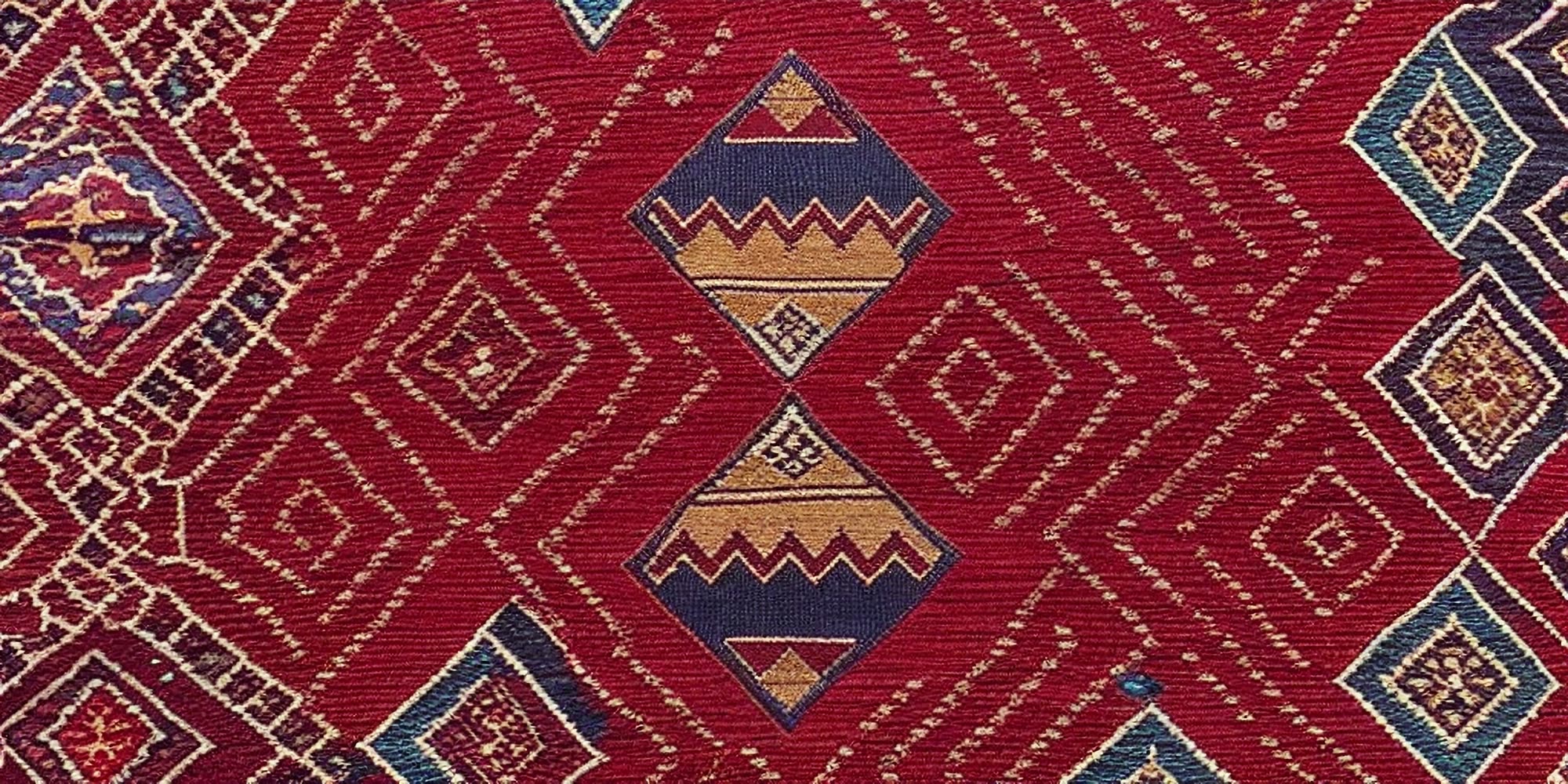
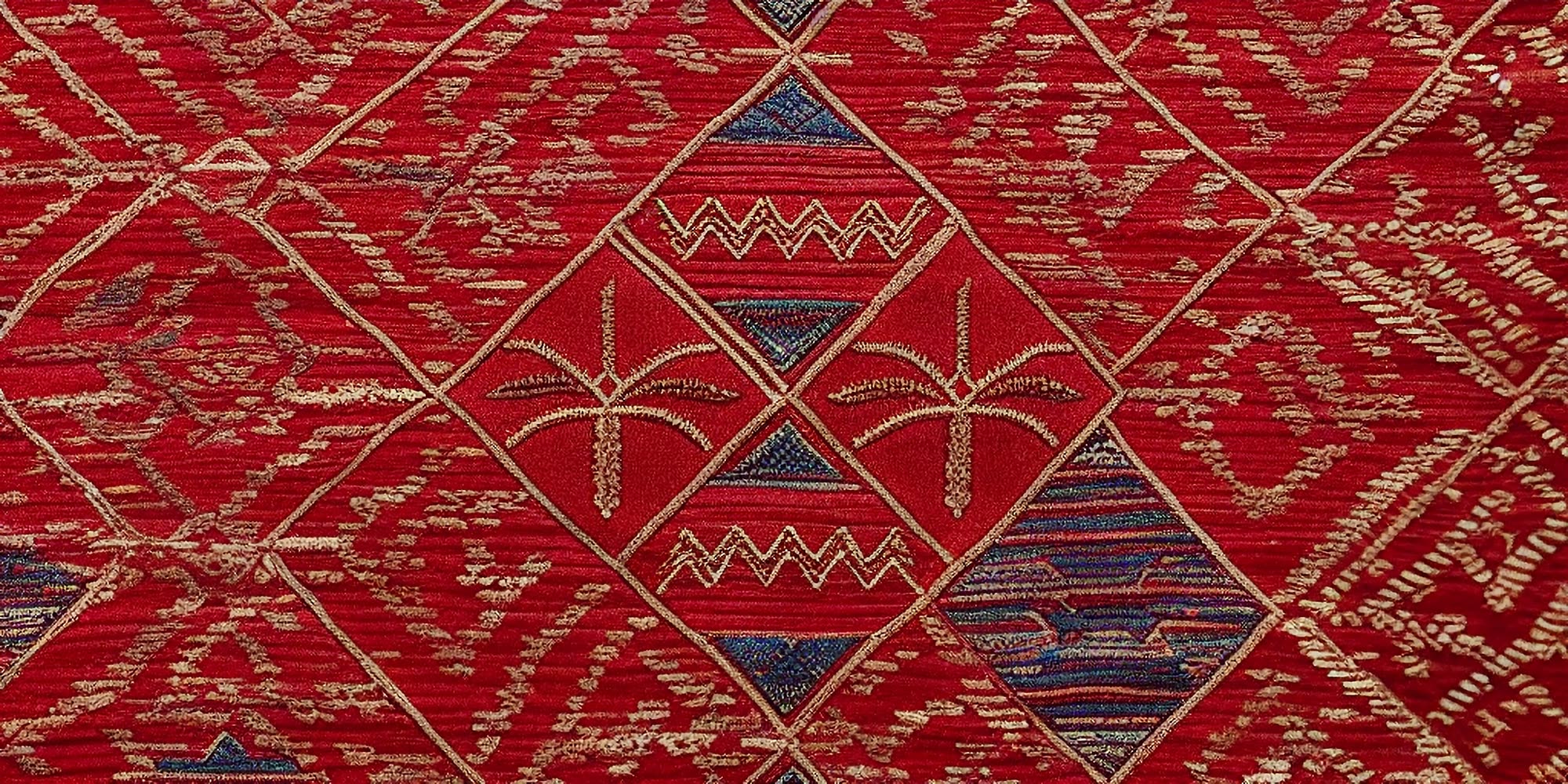
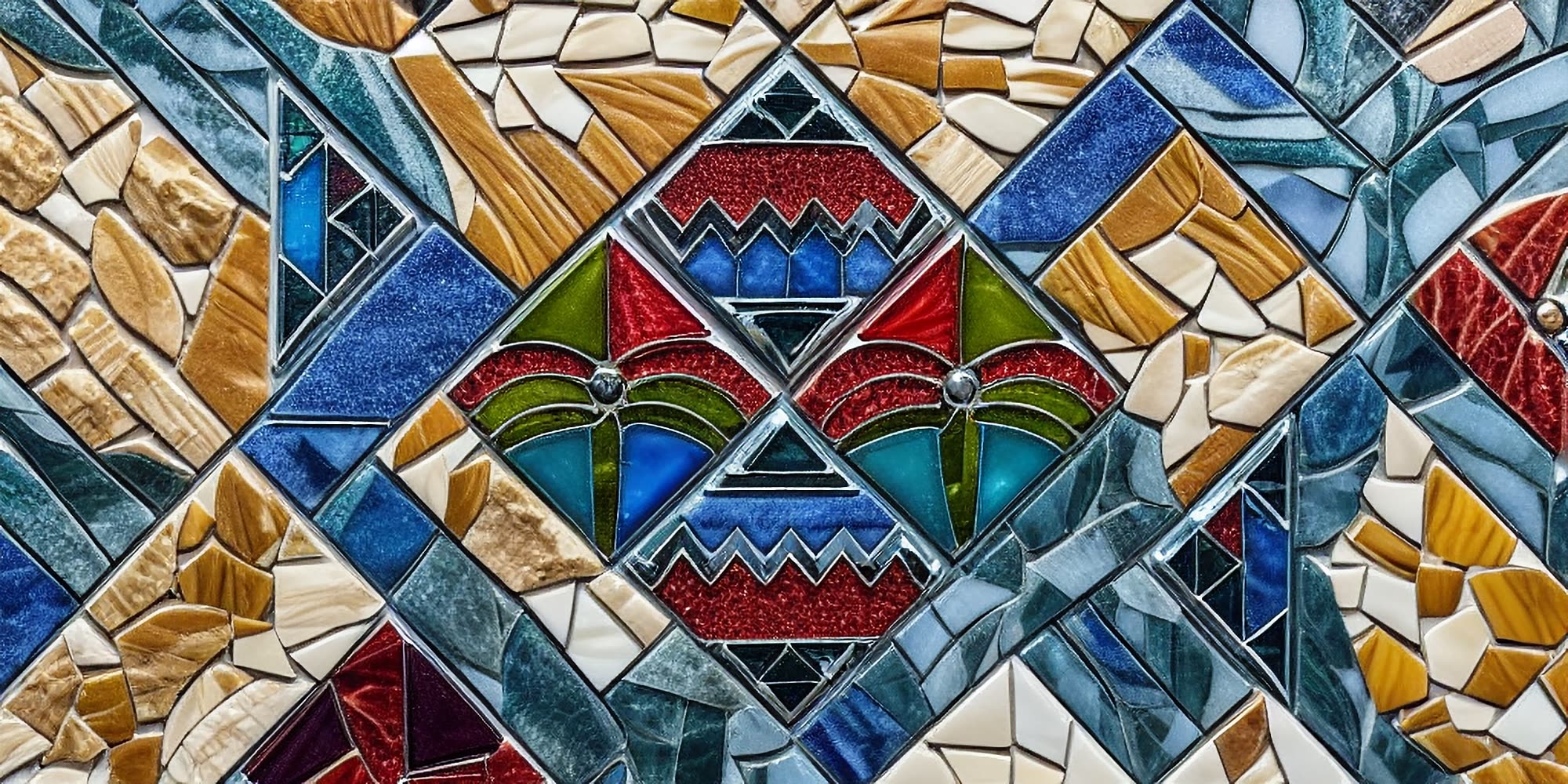
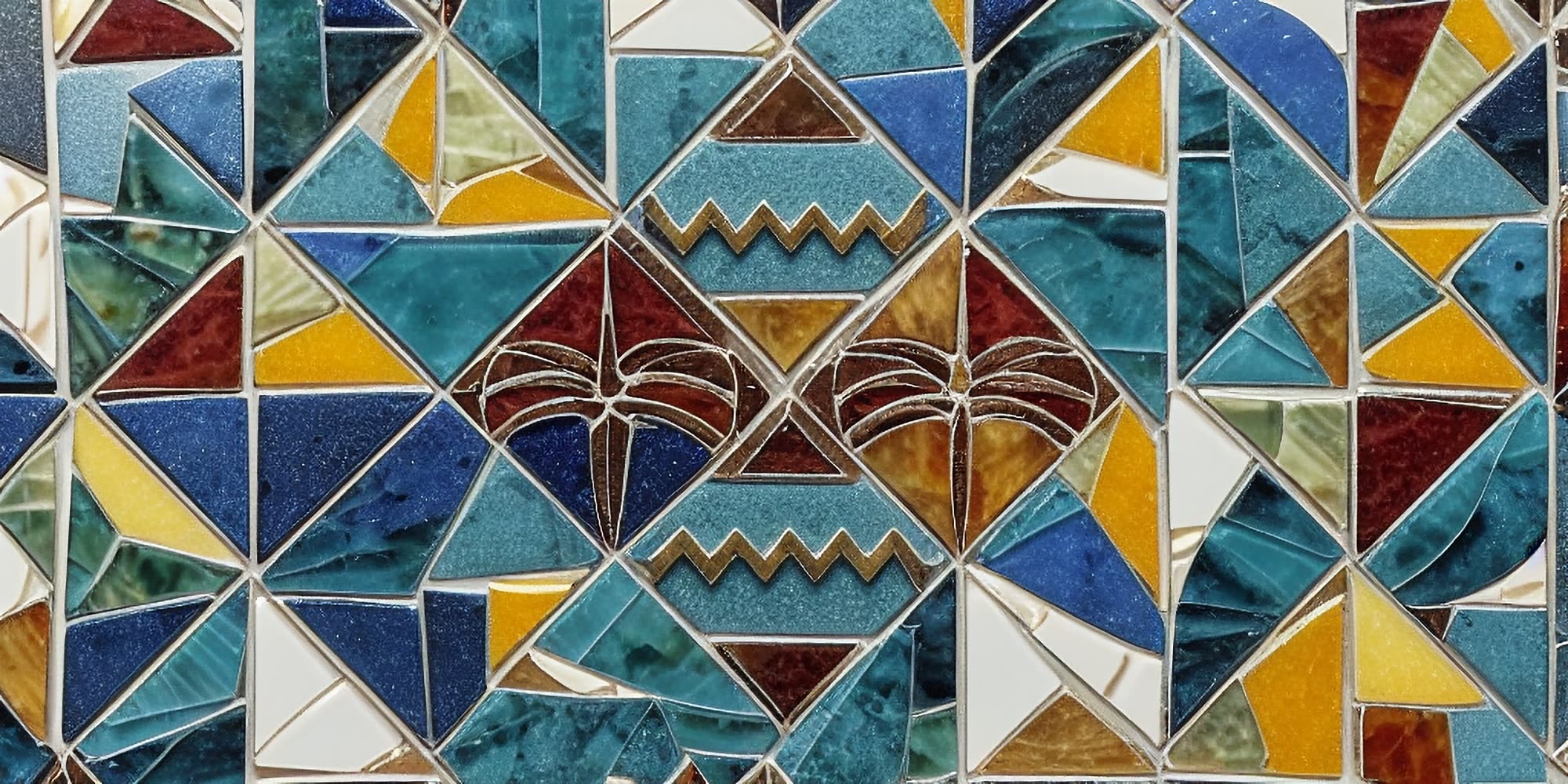
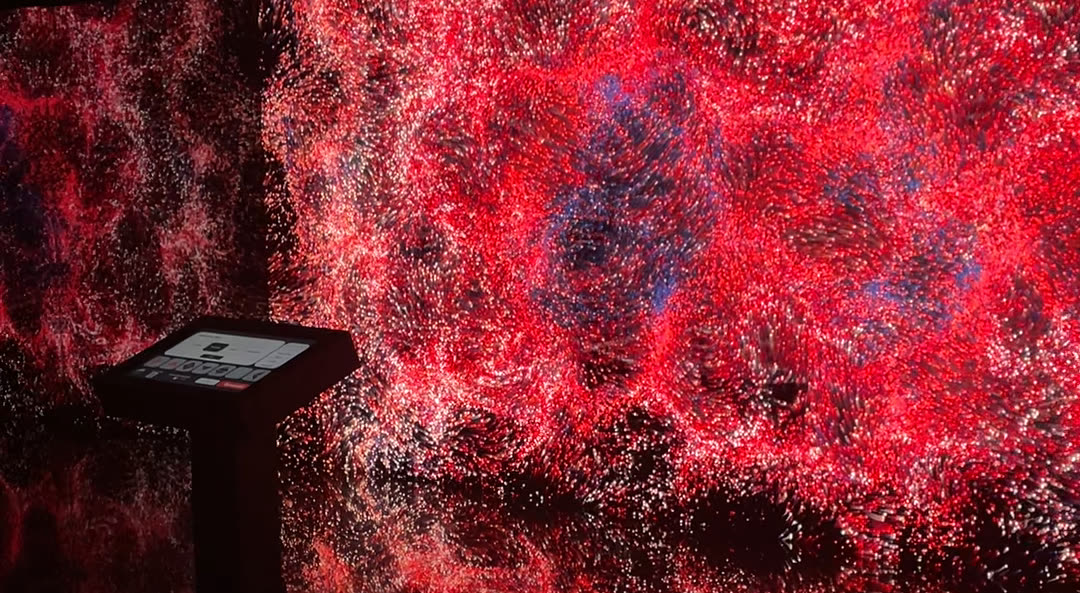
This installation combined AI technology with traditional Saudi patterns. Visitors interacted through a touchscreen, where they could choose and arrange traditional patterns to create their own unique composition. After selecting one of four craft-inspired themes — carpet, stained glass, woodwork, or mosaic — the system generated a visual that reinterpreted the user’s design in the chosen material style. The result could be downloaded instantly via QR code, allowing participants to save it as a wallpaper or share it on their devices. In addition, the installation offered real-time generative effects, letting visitors further explore and play with their creations on the big screen.
The setup featured a large LED screen with mirrored walls and floor, enhancing the immersive effect, along with a touchscreen interface for interaction. The entire system was built in TouchDesigner — including the UI, interactive logic, and generative effects — while the image generation was powered by Stable Diffusion.
Interactive Carpet
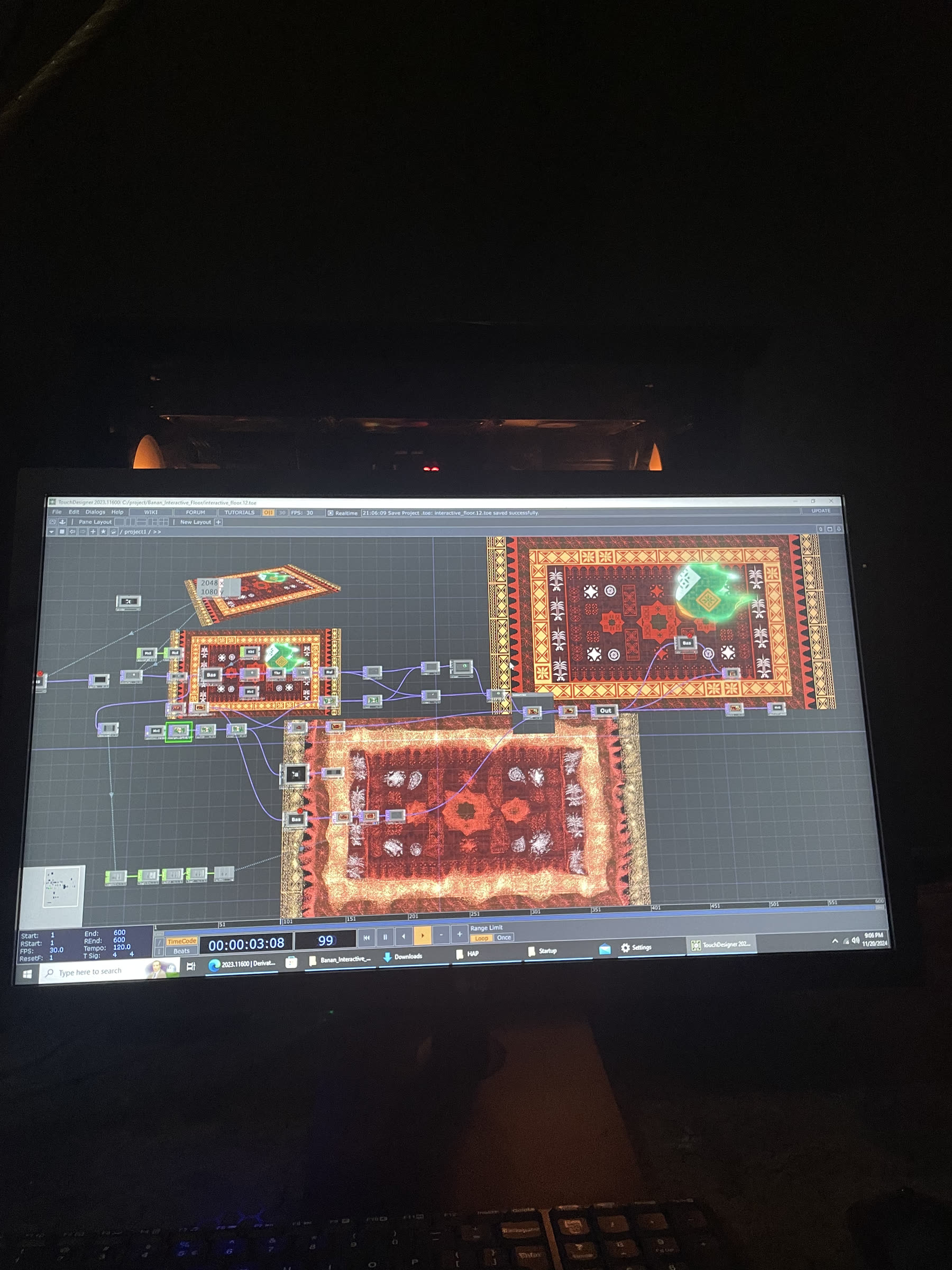
This installation transformed a traditional Saudi carpet into an interactive artwork through projection mapping. A real carpet was placed in the space, but instead of having its own ornament, it became a canvas for projected visuals. Visitors walking across the surface revealed a second hidden layer of patterns, uncovering another carpet design in real time.
The system used projection mapping directly onto the carpet, with two Kinect sensors mounted overhead to track visitors’ movements. A depth mask was generated from the Kinect data, allowing any object or person on the carpet to be detected. This information was processed in TouchDesigner, where a real-time generative mask blended between two designed carpet visuals. The carpets themselves were created by a motion designer as pre-rendered assets, while TouchDesigner handled the real-time interaction, depth processing, and compositing.
AI Vase
This installation invited visitors to design their own vase using a touchscreen interface. Participants could draw the silhouette of a vase, apply traditional Saudi patterns to its surface, and arrange them into a custom composition. The design was then processed with AI, which merged the drawing and motifs into a unified artwork. The finished vase appeared as a 3D hologram, allowing visitors to rotate and view it from different angles. In this way, the installation blended artificial intelligence with cultural heritage, giving each participant a chance to create a personal, contemporary version of a traditional craft object.
The vase was displayed on a hologram fan display, which created the illusion of a 3D object floating in space. All interaction was handled through a custom UI built in TouchDesigner, where visitors could draw, apply, and modify their patterns. The real-time AI generation was powered by StreamDiffusion, ensuring smooth transformation of the input drawings into finished vase designs.
Interactive Silhouette
This installation turned visitors’ silhouettes into living ornaments. Standing in front of the screen, people saw their outlines filled with traditional Saudi patterns and event-specific motifs. The installation also featured an idle state — a generative flow of ornaments — which shifted into a vibrant, interactive mode as soon as participants approached.
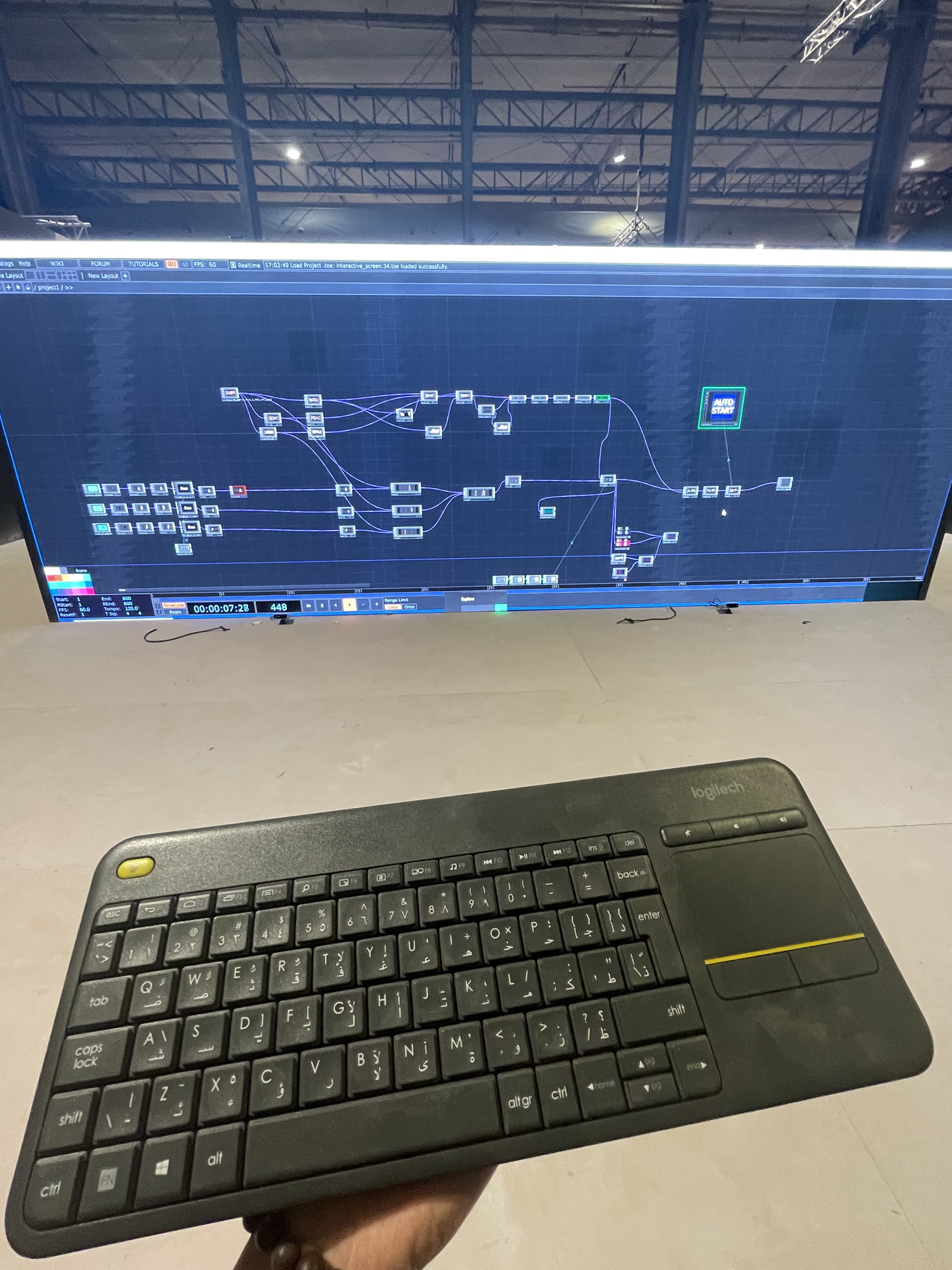
The setup consisted of a large LED screen powered by two Kinect sensors for body tracking. All data was processed in TouchDesigner, which handled silhouette recognition, ornament generation, and real-time transitions between idle and active states. The system supported several users at once, ensuring smooth interaction and visually rich compositions.
Some examples of generations from AI Sketch: